July 7 - Oct. 4, 2026
Ruben Shahverdyan: Ornamental Tales
Curated by
Zara Dilanyan
Exhibition Dates:
July 7 – October 4, 2026
Ruben Shahverdyan (1900-1976) was born in Sighnaghi (Georgia) and showed a natural talent for painting, sculpture, and music from childhood. Thanks to his versatile gifts, he successfully combined his studies at the Tiflis School of Painting and Sculpture (under Yeghishe Tadevossian) with singing at the opera theater and staging musical performances. Although fine art eventually became his primary path, music remained a central theme throughout his entire artistic journey.
Having become a regular participant in exhibitions since 1926, Shahverdyan established himself as a master of a decorative, vibrant, and distinctly Eastern style. His early paintings and graphic works depict family scenes, highly stylized figures of kintos, peasants, merchants, graceful Armenian women, musicians, and street vendors. While the artist also touched upon socialist and propagandistic themes, he nevertheless strove to remain as true as possible to his own creative principles.
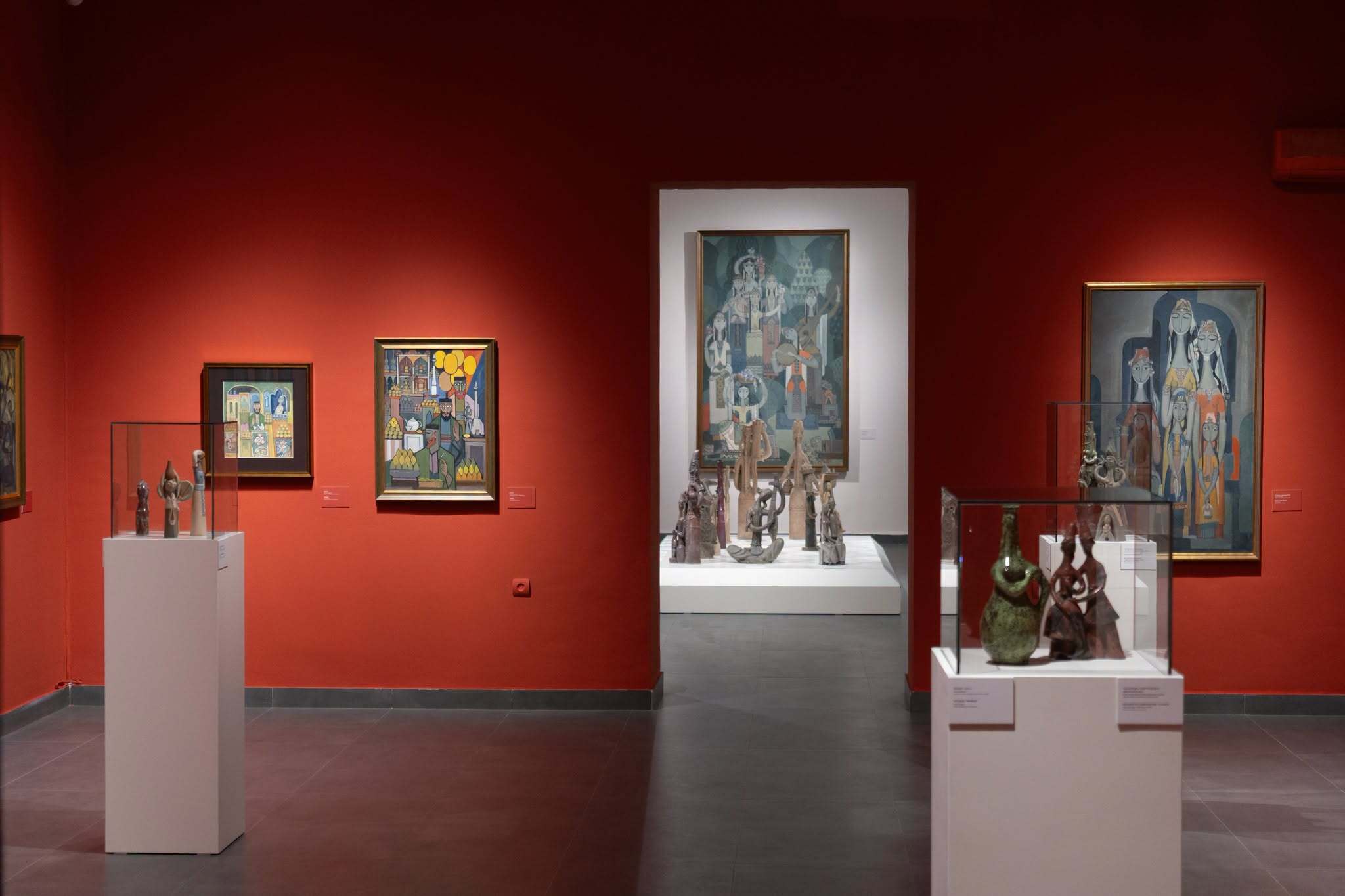
Having gained significant recognition in Tiflis, the painter moved to Armenia in 1941 and began deeply studying the traditions of Armenian architecture, miniature painting, and ethnography. This resulted in complex and innovative decorative qualities, which are particularly reflected in the artist's ceramic works.
Fascinated by ceramics from 1955 onwards, Shahverdyan applied diverse firing techniques for unglazed and high-fired clay, exploring the countless possibilities of the synthetic nature of pottery to reveal a rich variety of combinations in form, color, and surface. It was this ceramic art, distinguished by absolute creative freedom, that became his hallmark, bringing Shahverdyan widespread recognition and expressing his unique world perception and inimitable style.
The artist created an entire gallery of collective archetypes: kintos, musicians playing Eastern instruments, dancers, porters, and mothers with children. Each of these sculptures is a unique folkloric, satirical depiction that harmoniously merges with the vast crowd of characters participating in festivities, embodying the absolute joy and bliss of a living culture.
Shahverdyan also brought his bold pursuit of decorativeness, ornamentation, and color dynamics into the realms of faience, carpet weaving, and painting.
This jubilee exhibition, dedicated to the 125th anniversary of Ruben Shahverdyan, offers a unique opportunity to connect with the master's multifaceted legacy.