Branches
Hakob Kojoyan and Ara Sargsyan Memorial Museum
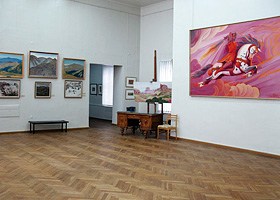
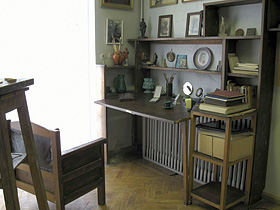
 In 1973 the two-storey private residence of sculptor Ara Sargsyan and painter Hakob Kojoyan, was given to the state by their successors. The building served as a house for the families of these two renowned Armenians and was used as a studio for the famed artists themselves. The previous residence currently operates as a house museum overseen by the National Gallery of Armenia.
Ara Sargsyan’s (1902-1969) art section displays the sculptor’s works from the National Gallery collection, pieces from family property, photos of works made in student years and handwritten memoirs. Here one can also find the theatrical accessories and graphic design works made by the artist.
Ara Sargsyan’s art is a peculiar blend of achievements of national and European art, which skillfully combines traditional and modern trends, monumental nobleness and lyricism, generalization of forms and images, and psychological emotionalism. Beside the thematic multi-figure compositions, high - relief sculptures, monumental works and multi-genre massive structures created through various challenging solutions, a special place is allotted to miniatures. Special attention is paid to slim female slim figures created with special tenderness and warmth.
 Busts were the prevailing genre in Sargsyan’s art. A master of many different sculptural media, he created marble, granite, bronze, and wood representations of prominent Armenian figures Manuk Abeghian, Hrachya Acharyan, Toros Toramanyan, Suren Spandaryan, Vardan Achemyan and many others.
Ara Sargsyan’s contribution to the establishment of the Armenian school of modern sculpture is great. In addition to being one of the founders, he was the first director and Head of the Chair of Sculpture of Yerevan Art-Theater Institute. Distinguished sculptors Ghukas Chubaryan, Ara Harutyunyan, Sargis Baghdasaryan, Levon Tokmajyan and others were apprentices to the master. These followers of Sargsyan further developed Armenian sculpture.
The second floor displays Hakob Kojoyan’s works, handwritten documents and personal belongings. Some of the works have been provided to the museum by the National Gallery of Armenia, others are donatations from the painter’s successors.
 Kojoyan’s role in the history of Armenian painting is very significant. His art is comprehensive, including graphic design, painting, and different branches of decorative applied art. Kojoyan’s paintings are characterized by sharpness of language, laconicism and expressiveness of forms, tenderness of colours, and mastery of compositional structure. In his paintings the artist reflects the daily routine of his motherland, admires and praises the nature, and remembers to historical events. Much more considerable is Kojoyan’s contribution in graphic art. Being a connoisseur of Armenian medieval miniature painting, he creatively used ornamental motifs in his book illustrations, especially in fairy-tales. Kojoyan is considered to be one of the founders of the new stage of book illustration. Among his best works are illustrations for the collection of poems “Sayat-Nova”, “Davit of Sasoun” by Hovhannes Toumanyan, “Book for the Road” by Yeghishe Charents, and many others.
Address: 70 Pushkin str., Yerevan
Tel: (+37410) 56-11-60
 Hakob Kojoyan and Ara Sargsyan Memorial Museum
- Studio-museum of Giotto (Gevorg Grigorian)
- Hakob Kojoyan and Ara Sargsyan Memorial Museum
- Etchmiadzin Art Gallery
- Museum of Mher Abeghian
- Hrazdan Art Gallery
- Gavar Art Gallery after Hrachya Buniatyan
- Martuni Art Gallery
- Alaverdi Art Gallery
- Yeghegnadzor Art Gallery
- Zakar Khachatryan and Artashes Hovsepyan Museum
- Jermuk Art Gallery
- Sisian Art Gallery
- Minas Avetisyan Museum
